Beyond Classrooms: How FE Empowers Students and Energizes the UK Economy
25 Jun 2026 | TCE Team
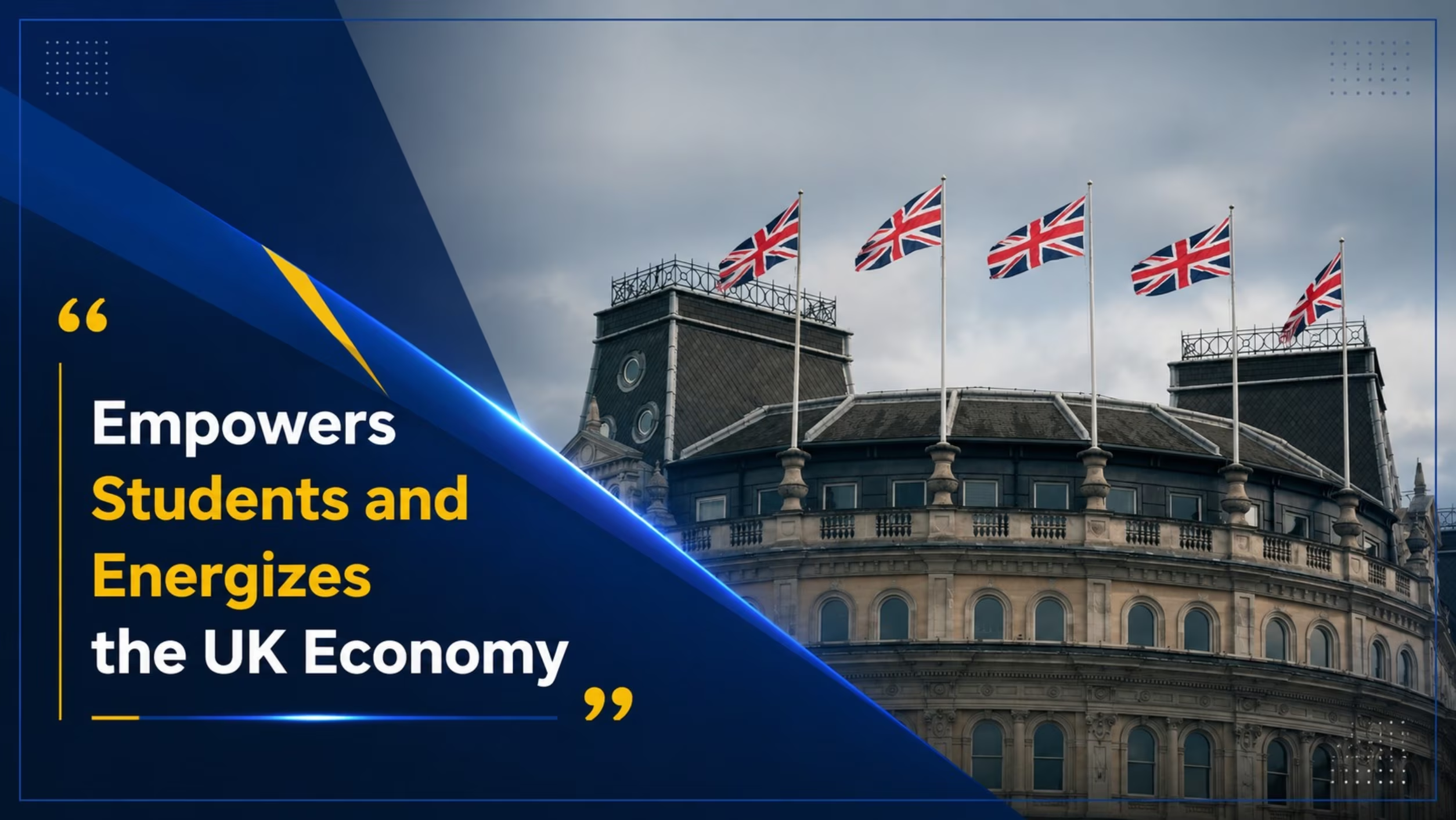
Beyond Classrooms: How FE Empowers Students and Energizes the UK Economy
We frequently picture classrooms, tests, and diplomas when we think of education. However, in the UK, further education (FE) is much more than that; it is a potent force behind both individual development and societal advancement. It serves as a springboard for students to pursue better structures and new careers. It plays a crucial role in the UK’s long-term economic success, productivity, and innovation.
Whether you are a student exploring your next step, or just wondering how UK further education has a positive knock-on effect for everyone, keep reading!
What Is Further Education (FE)?
Further Education (FE) sits between school and university – covering courses from vocational training to professional qualifications and apprenticeships. It is intended for students aged 16 years and up who wish to:
- Acquire employable skills.
- Get ready for university.
- Re-skill or upskill in a particular trade or occupation.
A wide range of programmes, from digital design and construction to engineering and healthcare, are offered by FE colleges and training providers throughout the UK, assisting students in connecting their education with practical demands.
FE’s Impact on the UK Economy
Bridging Skills Gaps
Because of innovation and technology, industries in the UK are constantly changing. By preparing students for high-demand fields like digital technology, healthcare, and renewable energy, FE institutions close the skills gap and guarantee that the workforce is prepared, skilled, and relevant.
Raising Employment Rates
Students who finish FE courses are more likely to land steady employment. Each graduate contributes to the economy in the form of taxes, productivity, and innovation.
Encouragement of Entrepreneurship
Young innovators are empowered by FE. Many students launch small businesses such as creative studios or digital marketing firms using their business and vocational skills, generating employment and economic growth.
Why FE Matters to Students
For students, Further Education isn’t just a course — it’s a launchpad.
- Flexibility: Choose between part-time, online, or in-person learning.
- Affordability: FE often costs less than university but opens doors to well-paid careers.
- Employability: Courses are tailored to real industry needs, giving you a head start.
It’s where passion meets purpose — where students don’t just study, but build futures.
The Future of FE in a Changing UK
FE will remain at the forefront of change as the UK transitions to a more digital and environmentally friendly economy. Government investment in apprenticeships and skills development shows that FE is becoming increasingly valuable. Students today aren’t just preparing for jobs – they are preparing to shape industries.
Conclusion: The Power of Practical Learning
More than just a link between school and university, Further Education (FE) is a vital source of development, opportunity, and innovation. Students have the opportunity to discover who they are, pursue their passions, and make meaningful contributions to society.
However, the real magic lies not in the statistics but in the stories of students who turn their passion into purpose. Every student who completes an apprenticeship, earns a diploma, or starts a business becomes part of a powerful cycle: learn, earn, and give back to the community and economy that helped them succeed.